Ashy Skin on Dark Skin Tones: Why It Happens and What Actually Works
Ashy skin is not a universal experience. It is disproportionately a dark skin experience.
The grayish, chalky appearance that shows up on knees, elbows, shins, and hands is visible on all skin tones — but on melanin-rich skin, it is dramatically more noticeable, more persistent, and more resistant to standard treatments. This is not coincidence. It is biology.
Understanding why ashy skin behaves differently on dark skin tones is the first step toward actually fixing it.
Why Dark Skin Is More Prone to Ashiness
Three structural factors make melanin-rich skin more susceptible to the visible effects of dryness.
Stratum corneum thickness. The outermost layer of skin — the stratum corneum — is measurably thicker in darker skin tones. This layer functions as the primary barrier between your skin and the environment. A thicker stratum corneum provides advantages: greater natural UV protection, slower aging of the deeper dermal layers. But it also presents a challenge. A thicker outer layer requires more intensive moisturization to stay supple, and when it dries out, the dryness accumulates across more layers before it becomes uncomfortable. By the time ashy skin is visible, the dehydration has already progressed.
Sebum production. Sebaceous glands produce natural oil — sebum — that lubricates the skin surface, reinforces the lipid barrier, and slows transepidermal water loss. Research consistently shows that darker skin tones produce lower levels of sebum than lighter skin tones. This means the skin has less natural protection against moisture loss. Without adequate sebum, the outer layer dries out faster, dead skin cells accumulate at the surface, and the characteristic grayish tone appears.
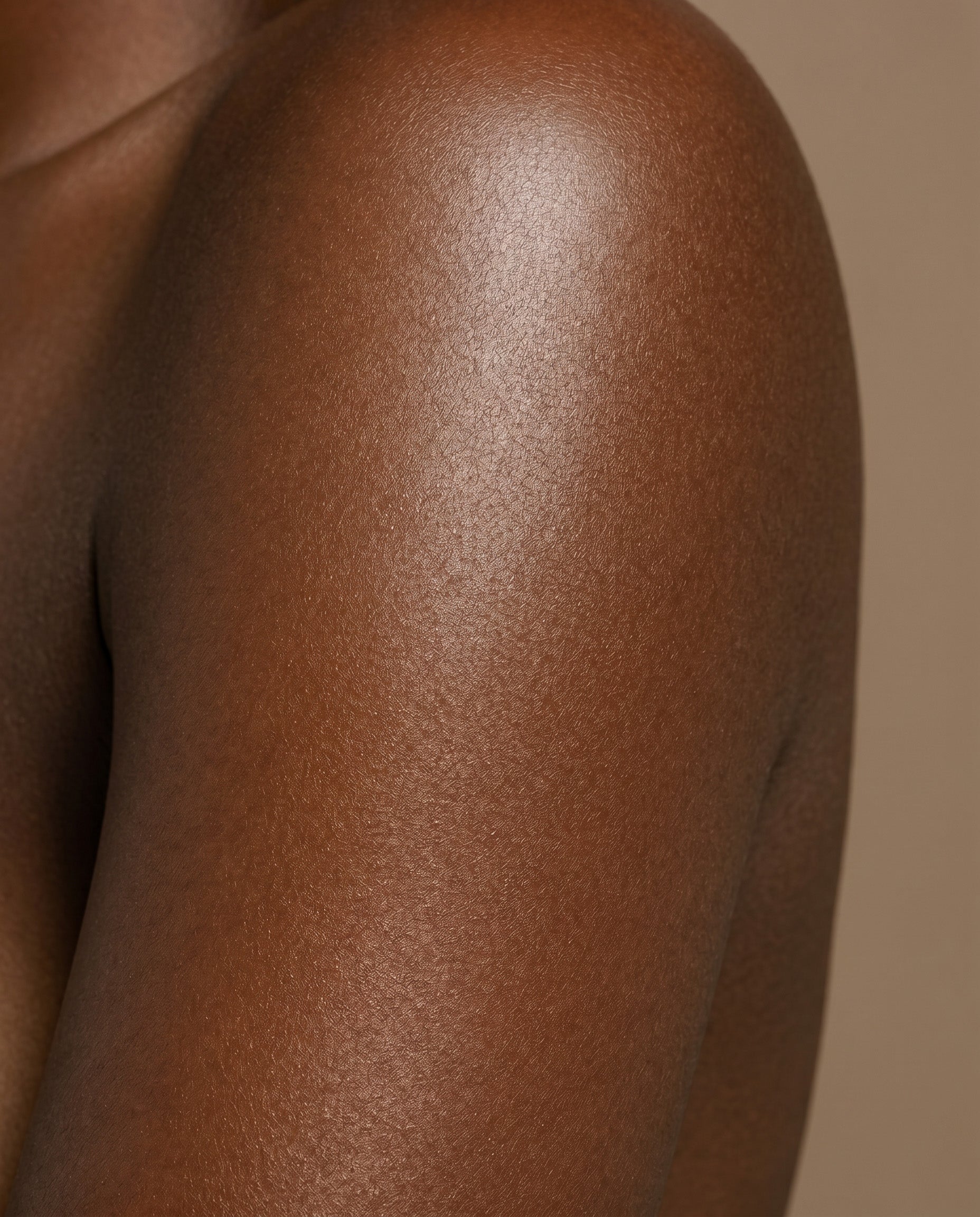
How light reflects off dry dark skin. The ashiness itself — the visual gray or chalky appearance — is a function of light scattering. Healthy, well-moisturized skin reflects light evenly, producing the glow and luminosity associated with good skin health. When the surface becomes rough and dry, with accumulated dead skin cells sitting unevenly on top, light scatters rather than reflects. On darker skin, this contrast between healthy glow and dry ash is starkly visible — far more so than on lighter skin where the effect is less pronounced.
Why Standard Moisturizers Underperform
Most body lotions are formulated for average skin — which, in a market historically centered on lighter skin tones, has not always accounted for the specific needs of melanin-rich skin.
The water-heavy formula that provides adequate daily hydration for normal skin is insufficient for skin that loses moisture faster, produces less natural sebum, and requires barrier reinforcement rather than surface hydration. Applying standard lotion to chronically ashy dark skin is like watering a drought-affected plant with a spray bottle — the gesture is correct but the quantity and delivery are inadequate.
Fragrance compounds in many mainstream lotions compound the problem. They can disrupt the barrier function of already-compromised skin, accelerating moisture loss and triggering inflammation that manifests as uneven tone and persistent dryness.
What Actually Works
Go anhydrous. For skin that has a structural tendency toward dryness and a compromised ability to retain moisture, waterless body care is not a luxury — it is a logical response to the skin's actual needs. Anhydrous formulas deliver concentrated lipids without the evaporation problem of water-based products. Every ingredient goes directly to the barrier.
Prioritize lipid-mimicking ingredients. The most effective formulas for dark skin use ingredients that closely resemble the skin's own lipid structure: oleic-rich oils like baobab and jojoba that absorb readily, fatty acid profiles that match the skin's natural sebum, and emollient butters that reinforce rather than coat. West African shea butter — high in vitamins A and E, used for generations across Sub-Saharan Africa specifically for skin protection — is among the most effective barrier-supporting ingredients available.
Apply immediately after bathing. The window between leaving the shower and towel-drying fully is when the skin is most receptive. Moisture is still present on the surface. A lipid-rich formula applied at this moment seals that moisture in rather than letting it evaporate. For dark skin prone to ashiness, this single habit change makes more difference than any product switch alone.
Exfoliate weekly. Accumulated dead skin cells are what create the visible ashy effect. Gentle chemical exfoliation once a week — lactic acid is the most effective and least irritating option — removes that buildup and allows moisturizing products to reach living skin rather than sitting on top of dead cells.
Be consistent. Barrier repair on dark skin that has been chronically dry takes time. The skin needs consistent lipid support to gradually rebuild its own protective function. Results compound over two to four weeks of daily application — not overnight.
The Bottom Line
Ashy skin on dark skin tones is not a cosmetic inconvenience. It is a signal that the skin barrier is underperforming and that the products being used are not addressing the underlying cause.
The fix is not more lotion. It is the right formula — concentrated, lipid-rich, and applied correctly to skin that genuinely needs what it contains.
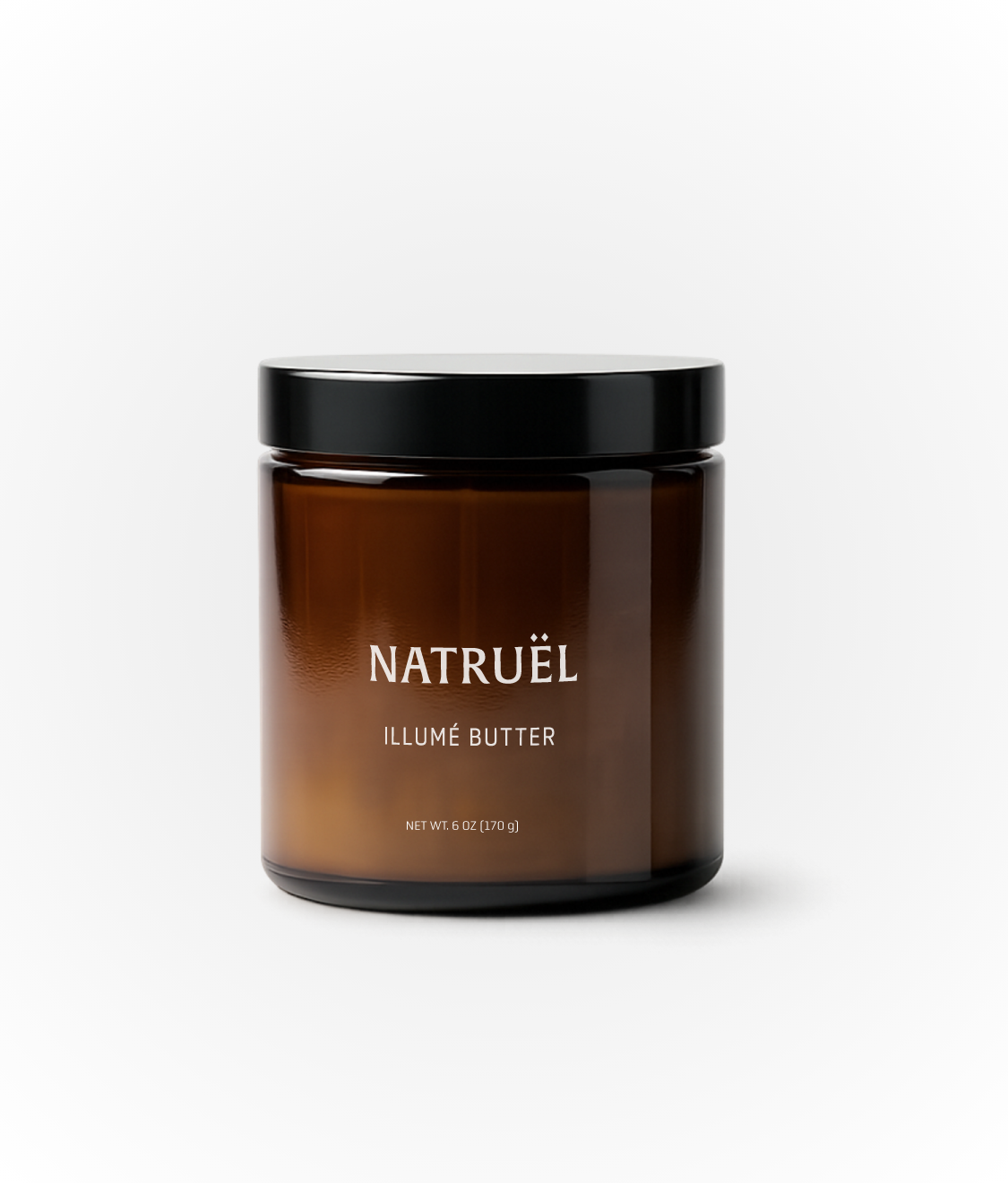
Illumé Butter was formulated with this in mind. Anhydrous body care built around West African shea, Amazonian butters, and integrating oils that work at the barrier level — not the surface. For skin that has been ashy longer than it should have been.
Start with the 2 oz Discovery Size — a 30-day introduction.